
Love, Attachment, and the Possibility of Letting Go
The Leopard (Jo Nesbø Edition)This thread follows the novel’s competing ideas of love as care, control, and violence, culminating in Harry’s recognition that attachment can require both staying and allowing others to choose.
increasing Bearing strength in each event
 decreasing
Bearing strength in each eventdecreasingLove and the Murderer’s Claim

Attachment Under Pressure
Love as vulnerability
Harry’s memories of Rakel and Oleg shape his return to Oslo, while his growing awareness of Kaja Solness creates an intimacy he does not trust himself to pursue. He reads attraction through the damage left by earlier relationships.
Love as possession
Tony Leike’s account of his childhood and his plans for Lene Galtung turn love into a claim of ownership. He treats her money, attention, and future as resources he is entitled to command.
Two incompatible meanings
The contrast between Harry and Tony is not that one feels attachment and the other does not. Rather, the novel asks whether attachment recognizes another person’s freedom or tries to erase it, a distinction that becomes decisive when Lene refuses the role Tony assigns her.
Kaja’s Chosen Vulnerability
Love and Accountability
Betrayal under pressure
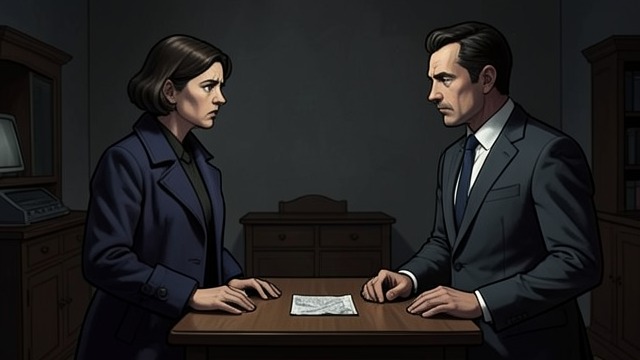
Kaja admits that she leaked information to Mikael Bellman because she was in love with him and believed his promises. She does not excuse the choice, recognizing that the betrayal also violated her own sense of who she was.
Intimacy is not absolution
Harry responds without pretending the betrayal did not matter. Their closeness develops amid distrust, grief, and danger, rather than serving as an easy cure for either character’s wounds.
Choosing a life beyond Bellman
Kaja ends her relationship with Bellman and continues to work with Harry. Her decision is not presented as proof that love guarantees safety; it is a refusal to remain inside a relationship where affection has been used to control her professional and personal choices.
A Mother’s Difficult Release
Letting a Daughter Choose
A hidden relationship revealed
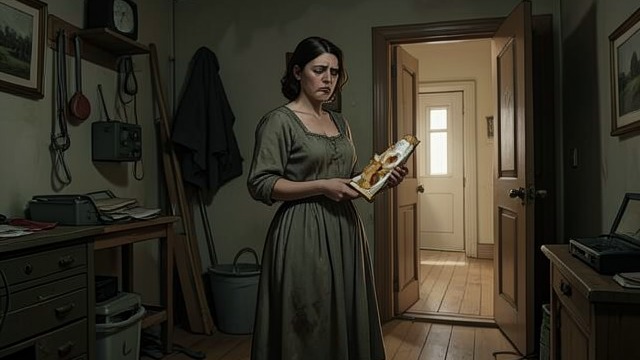
Harry learns that the woman working in the Galtung household is Lene’s biological mother. She describes the decision that separated them and the cost of allowing Lene to be raised as the daughter of a wealthy family.
Love cannot command a return
The mother knows that Lene has gone to Tony and may be in danger, but she does not pretend that Lene can simply be ordered home. Her own history teaches her how difficult it is to release a child without ceasing to love her.
A promise with limits
Harry offers to try to bring Lene back and promises to return her safely. The promise expresses care, but the story soon tests its limits: love motivates the attempt without granting Harry control over every outcome.
The False Wedding
Intimacy Turned into Coercion
A reunion staged as rescue
Lene reaches Tony believing that she has come to support the man she loves. He greets her warmly and begins telling a story that appears to offer trust and a shared future.
A proposal without freedom
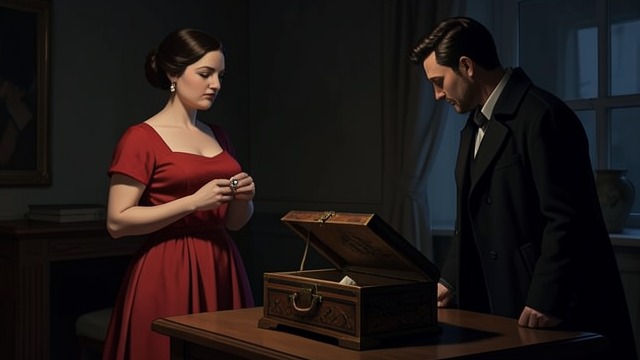
Tony reveals his murders and the history of his violence, then asks Lene to sign a marriage agreement and wear the Leopoldsapfel. His declaration of love is inseparable from coercion: he has taken her money, restricted her movement, and made refusal dangerous.
The image of marriage exposed
The ceremony turns a promise of mutual care into an instrument of domination. Lene’s earlier hope that she could build a life with Tony is confronted with the truth that he understands partnership as obedience and possession.
A Love That Does Not Rescue
Staying Is Not the Same as Saving
Survival changes the question
After the confrontation at Nyiragongo, Harry and Kaja survive, but their shared ordeal does not erase the losses around them. Harry has also learned that his father is dead and that his attempt to protect everyone cannot reverse every consequence.
Rakel remains a real attachment
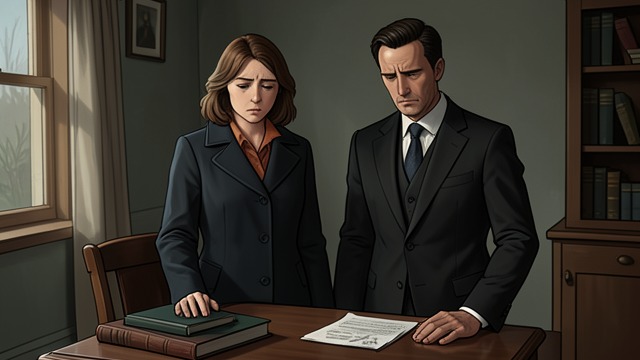
At the funeral, Harry sees Rakel and Oleg and later asks Rakel whether she will visit Olav before his death. Their relationship is tender but unresolved; affection does not automatically restore their former family life.
The choice to keep trying
Kaja tells Harry she would follow him to the end of the world, while Harry knows that love cannot guarantee she can save him from himself. He leaves, but not before accepting that he loves her and that trying again may still be possible, even when certainty is not.
During Harry’s return to Oslo and first meetings with Kaja
From the discovery of her betrayal through the hospital recovery
After the Kavalier is arrested
At Tony Leike’s villa in Görna
After the rescue at the crater and before Harry leaves again
